
Using climate change science to help post-fire rebuilds solve the real problems
The January 2025 Los Angeles wildfires, which burned over 50,000 acres and forced hundreds of thousands of people to evacuate, were the most destructive fires in the region’s recorded history. A team of climate scientists, including UCLA professor Alex Hall, conducted a rapid attribution study while the fires were still burning and as policymakers were already discussing how to prevent future disasters. Amidst uncertainty and finger-pointing, their research conclusively showed that climate change made fire fuels 25% drier. The study provided key, fact-based information at a time when the community needed it, and influenced the national conversation about rebuilding in the face of climate change.
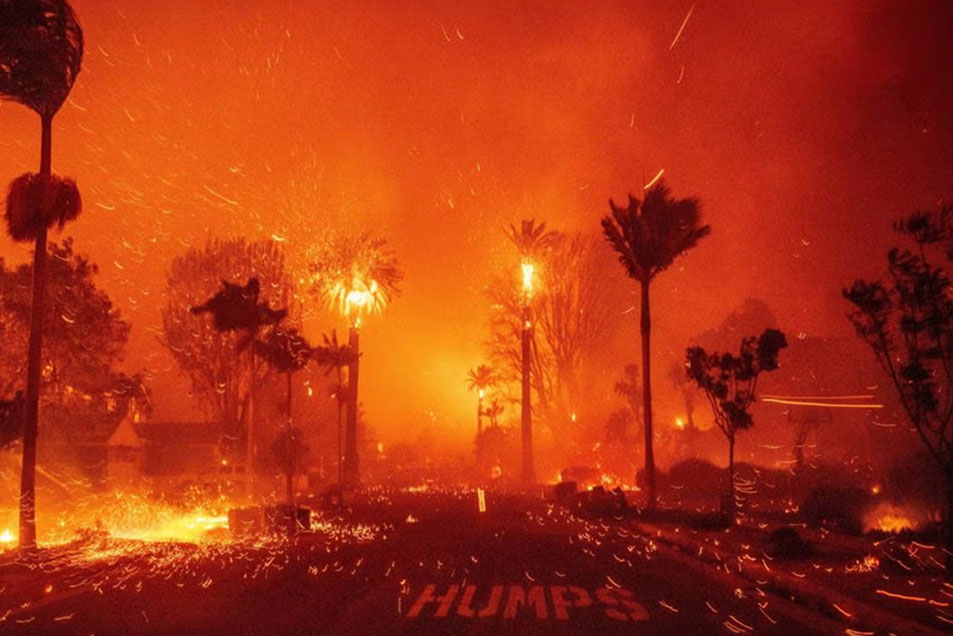
“The critical importance of climate research cannot be overstated. This year is on track to be the most destructive — and costly — in California history as a result of fire,” said Hall, a professor in the UCLA Department of Atmospheric and Oceanic Sciences.
As part of a team of scientists at UCLA’s federally funded Climate & Wildfire Research Initiative, Hall analyzed factors that contributed to the January fires, considering the region’s expected natural weather and climate variability. After measuring seasonal trends, moisture changes and precipitation levels, Hall and his team linked climate change to approximately a quarter of the extreme fuel moisture deficit when the fires started, among other findings.
They also concluded that while the fires would have been extreme with or without the impact of climate change, human-induced global warming intensified conditions. Recommended mitigation strategies include suppressing human ignitions, implementing structural changes and shifting urban development to zones with lower wildfire risk.
Hall, who also serves as director of the Institute of the Environment and Sustainability and faculty director of UCLA’s Sustainable LA Grand Challenge, has long studied climate change, with years of research showing the links between increasing global temperatures and growing wildfire risk. Hall also co-authored a study this summer that found climate change has expanded wildfire season from one to almost seven weeks earlier in California.
“These findings underscore the very real impact climate change has on people’s lives and livelihoods,” Hall said. Research like this, supported by the National Science Foundation and the Department of Energy, highlights the importance of federal funding in developing solutions.
Read how climate change fueled the unprecedented 2025 LA wildfires
Explore UCLA’s Climate & Wildfire Research Initiative
Learn how human-caused climate change is lengthening California’s fire seasons