Rethinking cities in an age of fire
The question facing California communities is not whether fire will return, but how cities can live with it. “FireCity FireLand: Towards a Regenerative Urbanism,”a publication predating the Eaton and Palisades fires that emerged from three years of UCLA-led research conducted between 2021 and 2024, argues that meeting this challenge will require rethinking how cities are designed, governed and inhabited.
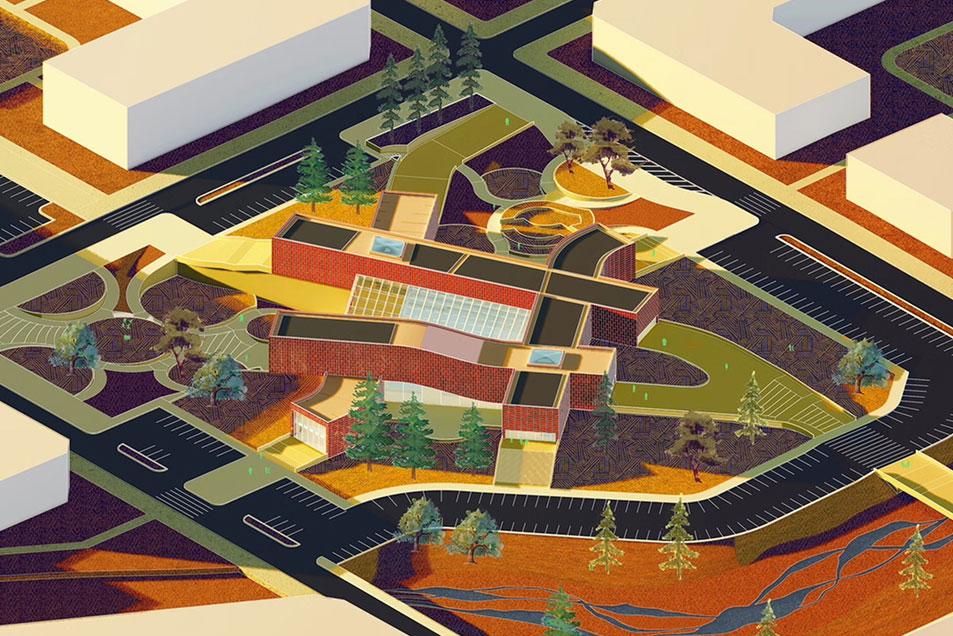
Developed through interdisciplinary design research studios at UCLA Architecture and Urban Design and led by UCLA faculty Hitoshi Abe and Jeffrey Inaba, the “FireCity, FireLand” studios examined the evolving relationship between the built environment and wildfire. As housing expands into the wildland-urban interface, climate change has intensified fire behavior, exposing vulnerabilities in infrastructure, land-use policy and emergency response. The publication brings together expert research on wildfire ecology, risk and resilience with student proposals imagining new ways for cities and landscapes to coexist.
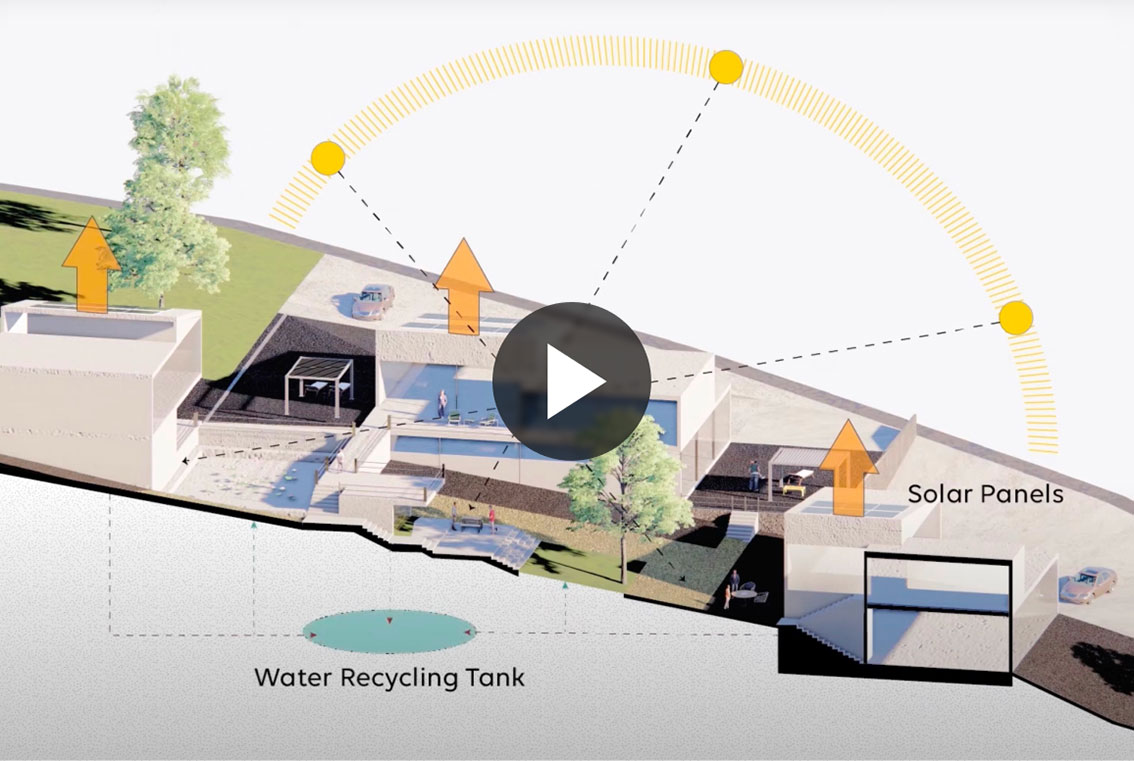
The concept researchers call “regenerative urbanism” moves beyond static master plans toward urban systems that can adapt, learn and respond to changing conditions. Drawing inspiration from biology and neuroscience, it treats cities less like fixed objects and more like living systems capable of anticipating risk and adjusting behavior over time. In wildfire contexts, that means designing urban forms, infrastructures and governance models that absorb, redirect and reduce harm rather than simply resist it.
In an interview with Archinect, Abe and Inaba described the research as an effort to envision “a new ecology of coexistence, a new interface of wilderness and city, an adaptive framework for human and other species.” They emphasized that fire must be understood not only as a physical phenomenon shaped by climate and terrain, but also as an economic and political one.
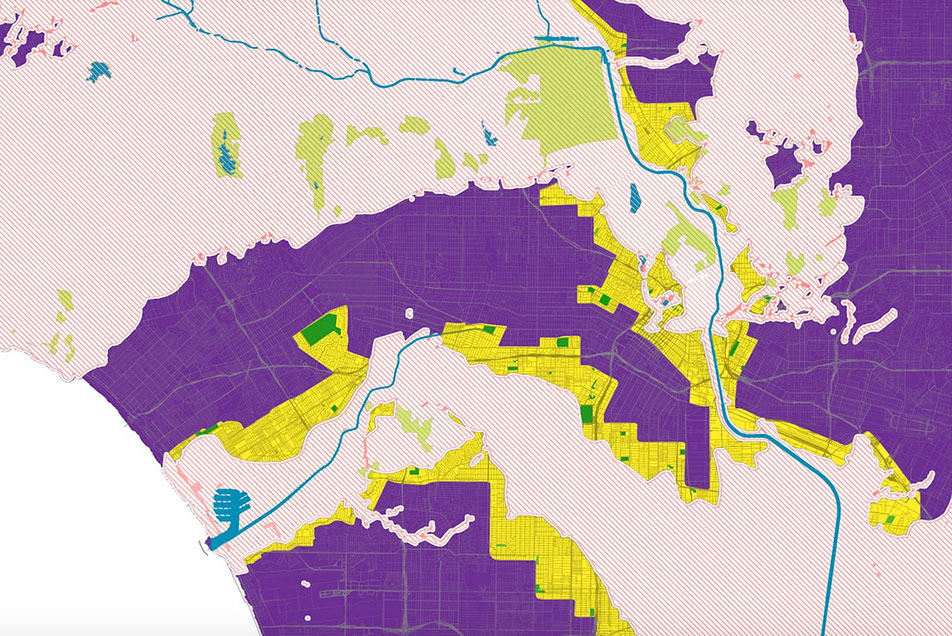
The Los Angeles region is naturally predisposed to wildfire due to its climate, vegetation and topography, conditions amplified by rising temperatures and prolonged drought. Fires here are ecological and social events, affecting housing, transportation, labor, insurance and public safety—often deepening inequities. By examining fire as both a technical and civic issue, the research underscored the need for coordinated solutions spanning architecture, engineering, planning and public policy.
This work was part of ArcDR³ (Architecture and Urban Design for Disaster Risk Reduction and Resilience), a global initiative of the Association of Pacific Rim Universities (APRU) Multi-Hazards Program, partnering with IRIDeS at Tohoku University and Miraikan in Japan to bring together 11 universities from disaster-prone regions. Through collaborative research studios, events and publications, the initiative integrates design and research to advance disaster resilience and inform future global standards for risk reduction.