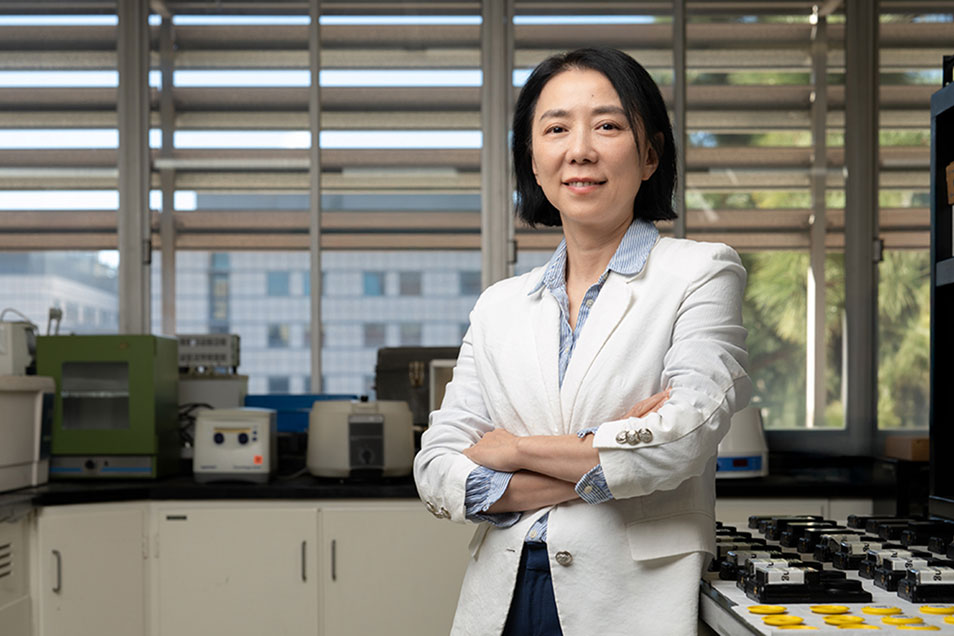
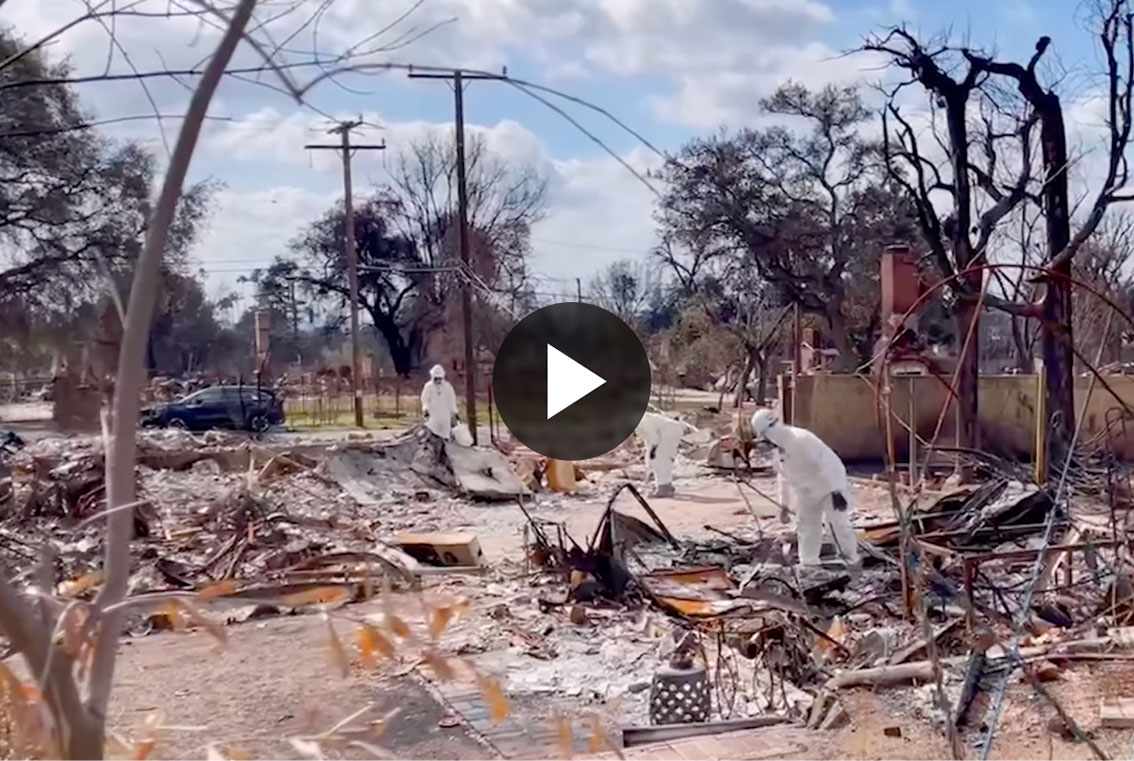
Air-quality researcher Yifang Zhu’s research team was preparing for a field study January 7, 2025, when the Los Angeles wildfires started in the Palisades and Eaton Canyon. Acting quickly, they shifted their focus to measuring air quality in and around the fires.
A year later, Zhu’s multiple research projects and papers are helping the public better understand the air they breathe during and after a firestorm.
“At the time, we realized how little we know about post-fire indoor air quality,” said Zhu, a professor at UCLA’s Fielding School of Public Health. So, her team got to work.
In three related projects, they took air samples during and after the two fires; examined whether and how people’s smoke-damaged belongings could be cleaned; and established a real-time air quality network in the Palisades.
Zhu’s lab collected indoor and outdoor air samples from homes in both fire zones and in regions far from the smoke plumes. They took the first samples on the second day of the fires, more samples at the 50% containment point and final samples in mid-February when the fires were contained. I Inside homes that were exposed to smoke or ash, air monitoring found that harmful particles, toxic metals and volatile organic compounds remained.
“Surprisingly, even after the fire, neurotoxins like lead and carcinogenic chemicals like arsenic remained relatively high, even in the post-fire indoor air and even after the outdoor air levels dropped back to more typical levels,” Zhu said. “But there is good news. After the fire, you can reduce the indoor pollutant levels by increasing ventilation, opening windows more often, running your air purifier and removing heavily impacted items from indoor spaces.”
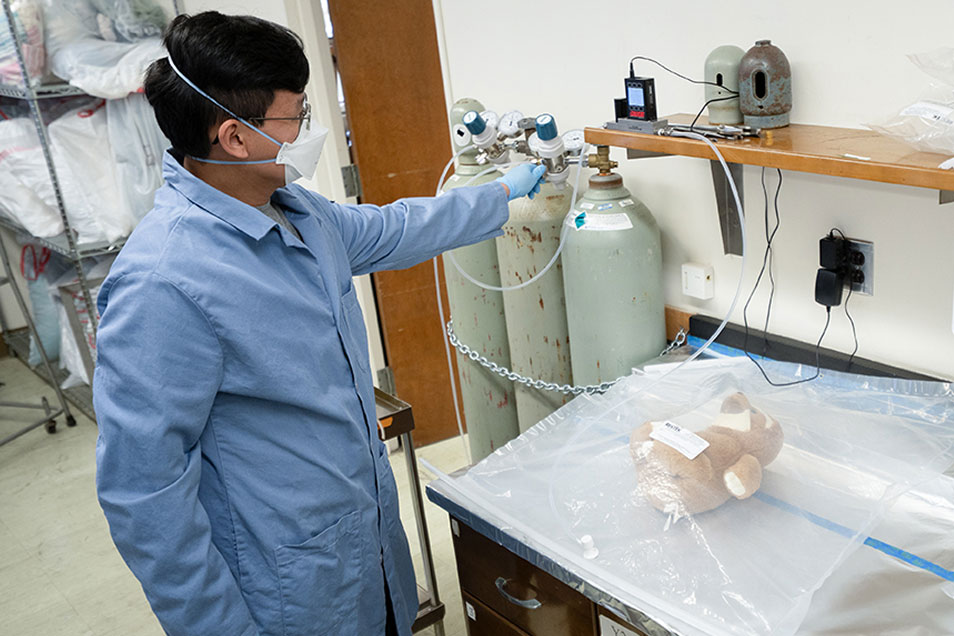
But where were the harmful chemicals coming from after the fire? Zhu’s team set out to collect smoke-damaged stuffed animals, blankets and clothes to determine what pollutants they continued to emit, and to find effective cleaning methods. In December, they finished testing nearly 200 of these “soft goods” from 10 homes in the Palisades,10 homes in Eaton Canyon, and five control homes untouched by fire and smoke.
“Our early results indicate that those materials continue to give off chemicals for quite a while,” Zhu said.
Now, her lab is trying simple methods like airing out the smoke-damaged treasures or running them through household washing machines. Her team will test all the toys, pillows and clothes again to see if they are clean enough to be safe.
“The goal is to figure out simple measures that work and share that information with the community so they know what items can be saved,” Zhu said. “The ultimate goal is to develop a playbook that schools, families, and public health agencies could use in wildfire recovery to help people return home safely after any wildfire, not just the January fires.
“As a public university, we have a responsibility to make sure that our research benefits the public and serves the public good,” Zhu said. “There is a need — and it is our obligation — to turn our scientific knowledge into something tangible that can protect public health.”
Air-quality researcher Yifang Zhu’s research team was preparing for a field study on January 7, 2025, when the Los Angeles wildfires started in the Palisades and Eaton Canyon. Acting quickly, they shifted their focus to measuring air quality in and around the fires.